EV Charger Installation guide
Single-phase or three-phase EV charging: which does your Brisbane home actually need?
Most Brisbane homes will charge an EV just fine on single-phase power. If you drive a typical daily distance and plug in overnight, a single-phase 7.4 kW charger will likely top your battery before breakfast. Three-phase becomes worth the extra spend when you have a large-battery vehicle, a short charging window, or solar you genuinely want to maximise.
That said, the answer is not always obvious, and the wrong choice costs you either way: over-spend on three-phase you never use, or install single-phase and wish you hadn't when your next car arrives.
Here is what you actually need to know.
What single-phase and three-phase actually mean at the charger
Australian homes receive alternating current (AC) from the grid. Single-phase power delivers one continuous wave of voltage, typically 230 V, and most older Brisbane homes in suburbs like Camp Hill, Annerley and Tarragindi were built and wired for exactly that.
Three-phase power delivers three separate voltage waves offset in time, giving you 400 V between phases. Factories, commercial buildings and some newer residential developments have it. Some character homes in Highgate Hill and West End that have been substantially renovated may have already had it brought in for air-conditioning loads or workshop equipment.
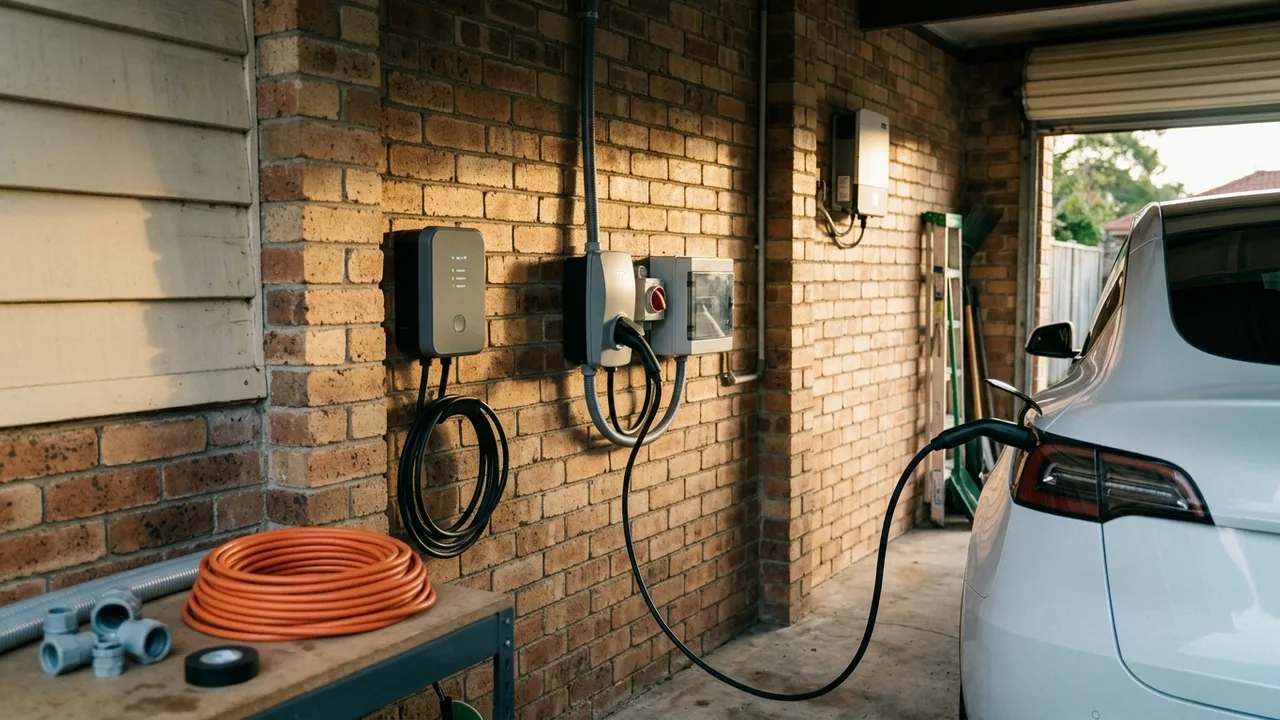
At the charger, the difference is speed. A single-phase circuit is typically limited to about 32 A, which translates to roughly 7.4 kW of charging power. On three-phase you can push 11 kW (a very common residential option) or up to 22 kW if your charger and vehicle both support it.
If your car's onboard AC charger only accepts 7.4 kW anyway (which is common in current-generation vehicles including the Tesla Model 3 Standard Range and many Hyundais), running three-phase wiring to the wall box gives you no speed benefit at all. The limiting factor shifts from your electrical supply to the car itself.
How long will single-phase actually take?
Let's put numbers to it. A vehicle with a 60 kWh usable battery arriving home with 20% charge (12 kWh) needs about 48 kWh to reach full.
- At 7.4 kW (single-phase 32 A): roughly 6.5 hours
- At 11 kW (three-phase): roughly 4.5 hours
- At 22 kW (three-phase, if the car accepts it): roughly 2.2 hours
For most people in Coorparoo or Kangaroo Point who leave the house at 7:30 am and plug in at 6 pm, even single-phase has hours to spare. If you are running two EVs on one charger in rotation, or you are doing long distances and arriving home late, the maths shifts.
A good rule of thumb: if your daily driving is under 150 km and you charge overnight, single-phase is almost certainly enough today.
The Brisbane-specific picture: what's in your switchboard already
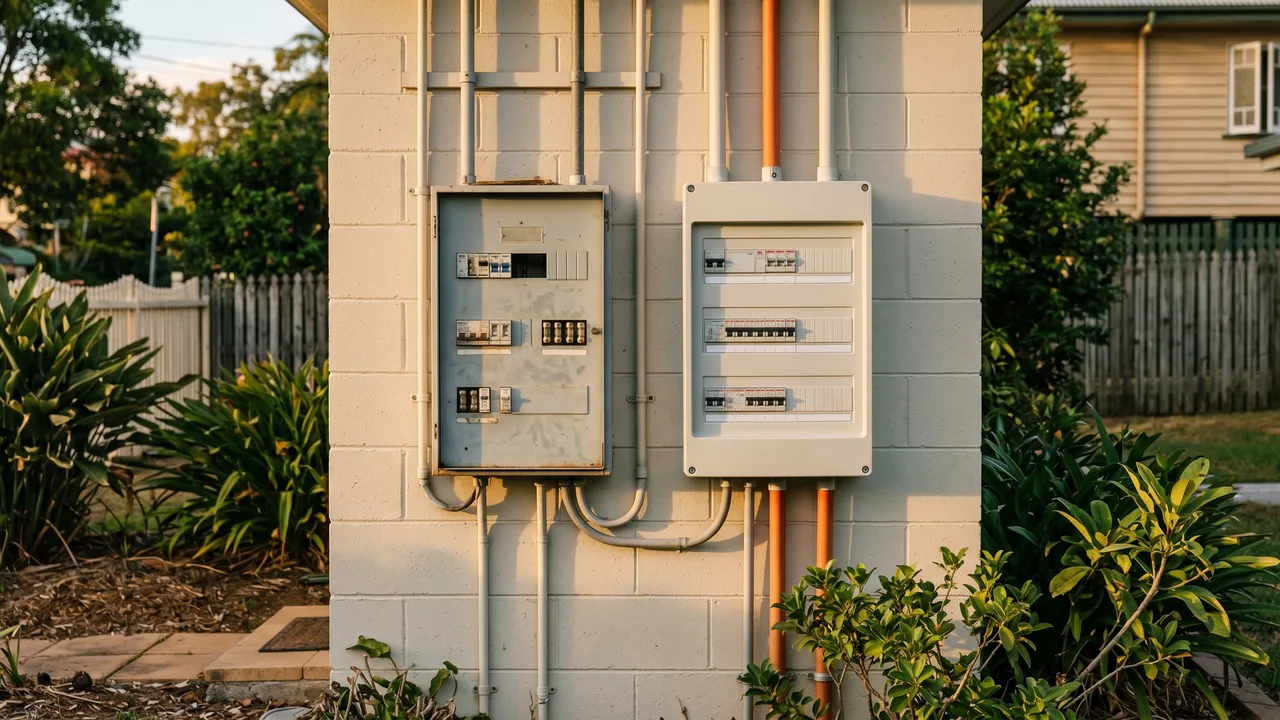
This is where local context matters. Many Queenslander-era homes in our cluster (Dutton Park, Woolloongabba, Greenslopes and the older streets of East Brisbane) were originally wired on 60 A single-phase service. Some have had switchboard upgrades over the decades; many have not.
Before you decide on three-phase, we check whether your address already has three-phase available at the street. Not every Energex feeder in inner south Brisbane carries all three phases to the kerb, and if the infrastructure is not there, bringing it in involves Energex and can add time and cost well beyond what we control.
Where three-phase is available at the meter, the upgrade typically involves a new switchboard or at minimum a new main switch and metering arrangement. That work is licensed, inspected and notified to Energex. Our switchboard upgrade service covers this end to end, and we can usually clarify the infrastructure situation before you commit to anything.
For newer townhouses in South Brisbane and West End (particularly medium-density builds from the 2010s onward), three-phase is often already there, quietly sitting in the switchboard waiting to be used. Worth asking.
Solar integration: does three-phase help here?
If you have a rooftop solar system and want to charge your EV from surplus generation rather than grid power, phase matching matters more than most installers explain.
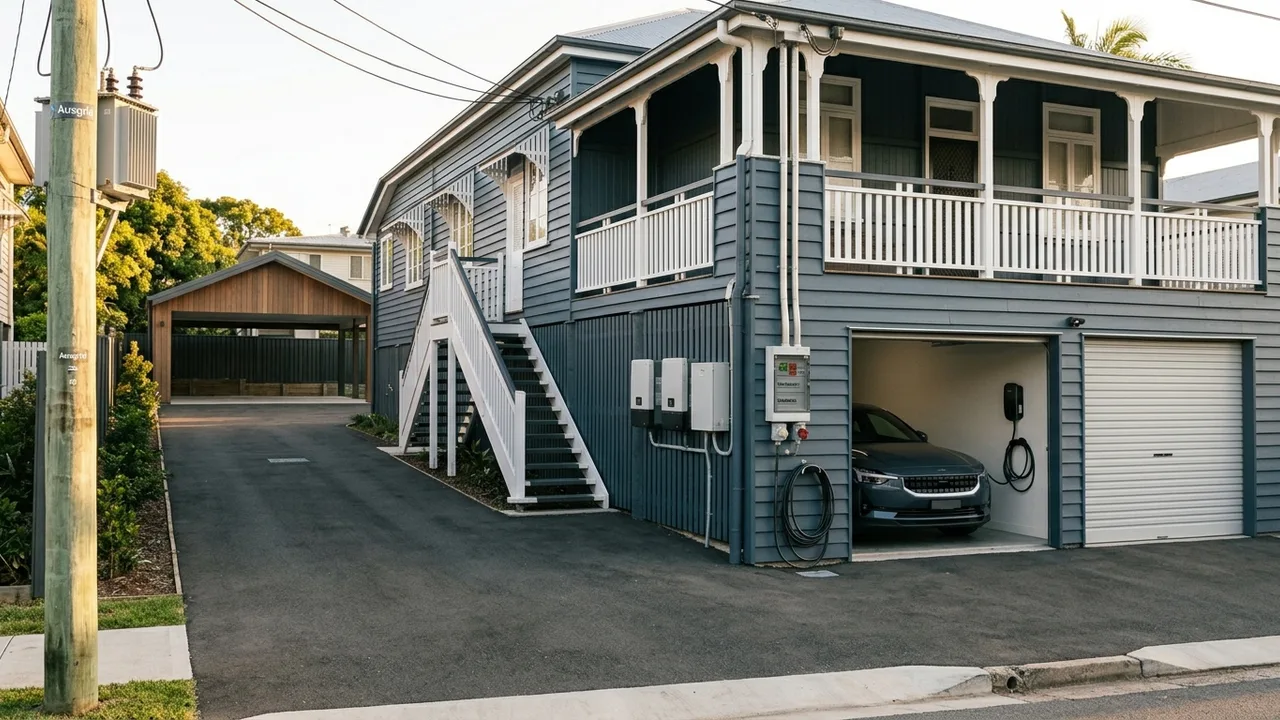
A typical Brisbane home solar system exports between 2 kW and 5 kW of surplus at midday, depending on system size, panel orientation and shading from nearby trees (jacaranda season genuinely affects this in some inner-west streets). A 7.4 kW single-phase charger will not run at full speed on solar alone unless your system is large, north-facing and it is a clear midwinter day.
The practical move for solar-integrated charging is usually a smart charger that modulates its draw to match available solar export, rather than running flat-out. These work on both single-phase and three-phase setups. Our solar-integrated EV charging setup uses chargers that do exactly this, adjusting charge rate in real time.
If your solar system is three-phase (common in higher-export systems over 10 kW), matching your EV charger to three-phase can improve the way excess energy is used. But for a typical 6.6 kW single-phase solar install, a well-configured single-phase charger is likely the better-value option.
The cost trade-off, honestly
Single-phase EV charger installation in a straightforward Brisbane home (existing adequate switchboard, charger location within reasonable cable run of the board) typically lands in the $1,800 to $2,800 range depending on the charger chosen and the complexity of the cable run.
Adding a three-phase upgrade to that, where infrastructure exists at the property, typically adds $800 to $1,800 on top. That is real money. It makes sense when you are also planning to expand your solar system, run larger appliances, or buy a vehicle that genuinely benefits from faster AC charging.
It is less easy to justify when your current car tops out at 7.4 kW and you have a 10-year mortgage on the house. The honest position: single-phase now, with wiring run in conduit so the upgrade path is straightforward later, is a reasonable and common choice.
We do not push three-phase upgrades for the revenue. We push them when the numbers make sense for your situation.
What to do if you are renting or in a strata building
Apartment buildings in Kangaroo Point, South Brisbane and Highgate Hill often have three-phase supply to the building but single-phase to each unit. For residents wanting a dedicated bay charger, the supply arrangement depends on body corporate approval and what is technically available at your car park level.
This is a separate conversation from a standalone home install, and we handle body corporate approvals as part of our apartment and strata EV charger installation service. The phase question comes up there too, but the answer is almost always single-phase per bay unless the building has dedicated three-phase infrastructure to car park circuits.
The sensible way to decide
Get a licensed electrician to look at your switchboard, confirm what phase supply you already have, and check the Energex infrastructure at your street. From that point, the choice becomes much clearer.
For most detached homes in Coorparoo, Camp Hill, Annerley and the surrounding suburbs: single-phase at 7.4 kW installed now, with conduit run to allow a future three-phase pull-through, is the practical starting point.
For households with a large-battery vehicle arriving now (80 kWh or more), an existing three-phase supply, or a plan to add a second EV within a few years: three-phase from the start makes the numbers work.
If you are not sure where your home sits, that is exactly the kind of question worth a quick conversation before you buy a charger or commit to an install. We cover Coorparoo and the surrounding inner-south Brisbane suburbs, and a pre-quote site check is part of how we scope every job.
Quick answers