EV Charger Installation guide
Is a renovation or new build the best time to install an EV charger in Brisbane?
Yes — But the Timing Is Everything
Renovation or new build is almost always the best time to install an EV charger at your Brisbane home. The simple reason: when walls are open, trenches are dug and electricians are already on site, running a dedicated circuit costs a fraction of what it costs later. That said, "best time" does not mean "only time," and knowing exactly why it matters helps you make a smarter call.
Why the Build Phase Changes the Economics
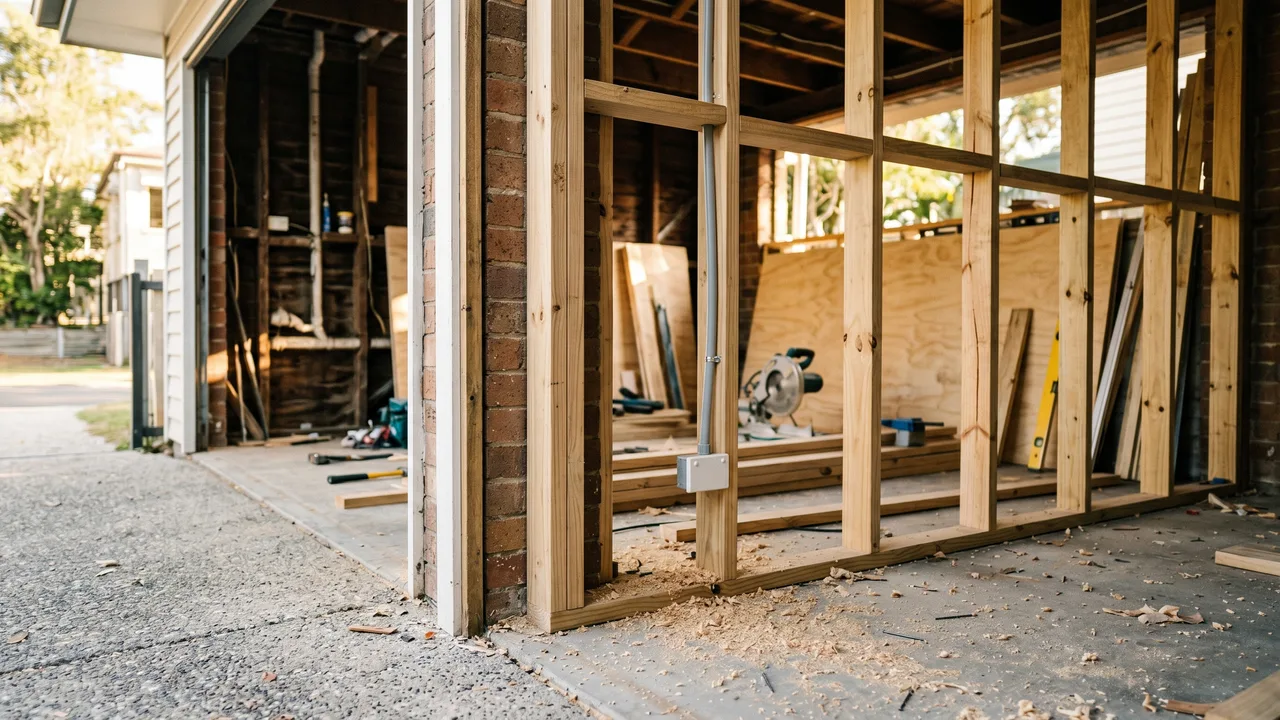
When a builder is mid-construction, conduit can be run through wall cavities before the plasterboard goes on. Cable can be chased under a concrete slab before the pour. A trench from the switchboard to the garage costs very little when the landscaping has not happened yet.
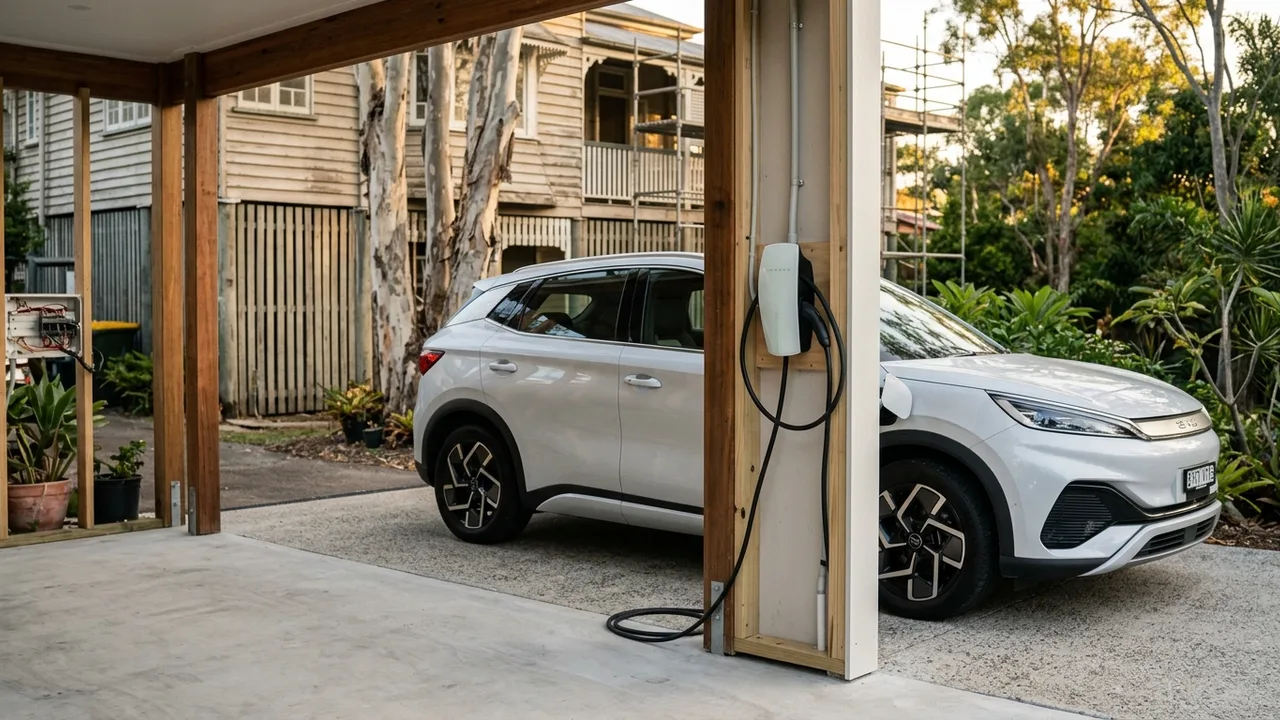
Compare that to a retrofit on a finished Queenslander in Coorparoo or Camp Hill. The electrician may need to fish cable through 100-year-old hardwood frame, run surface conduit down an exterior wall, or cut a trench through established garden beds and a concrete driveway. None of that is impossible, and we do it regularly across the cluster of suburbs we cover from South Brisbane to Tarragindi. But it typically adds labour hours, and those hours add cost.
As a rough guide, a dedicated EV charger circuit run during a renovation or new build might sit at the lower end of the $1,800 to $4,500 range we typically quote for a complete supply-and-install job. A retrofit on a finished house with a difficult cable path can push toward the upper end, depending on the switchboard condition and the run length.
What to Lock In During a Renovation (Even If You Do Not Own an EV Yet)
This is the part many Brisbane homeowners miss. You do not need an EV today to benefit from planning now.
At minimum, ask your builder or electrician to install:
- A dedicated 32A circuit from the switchboard to the garage or carport, terminated in a weatherproof outlet or blank plate. The wire is already in the wall; connecting a charger later is a simple job.
- 20mm or 25mm conduit from the switchboard to the parking area if the cable is not being pulled immediately. This gives a future electrician a clear path.
- A spare double-pole circuit breaker space in the switchboard, labelled for EV use.
If your switchboard is being replaced as part of the renovation anyway (which is common in older Inner West homes), it is worth upgrading to a modern consumer mains board rated for the additional load. Many Queenslanders in Highgate Hill, Annerley and Greenslopes still have switchboards from the 1980s or earlier. A switchboard that was fine for a 5-kilowatt air conditioner and a 3-star oven is not necessarily fine for a 7.4-kilowatt EV charger running six to eight hours overnight.
Three-Phase vs Single-Phase: The Renovation Decision You Cannot Easily Undo
Single-phase power is standard in most Brisbane suburban homes. A 7.4-kilowatt wall-mounted charger on a 32A single-phase circuit will typically charge a 60-kilowatt-hour battery from near-empty overnight. For most people who park at home each night, that is perfectly adequate.
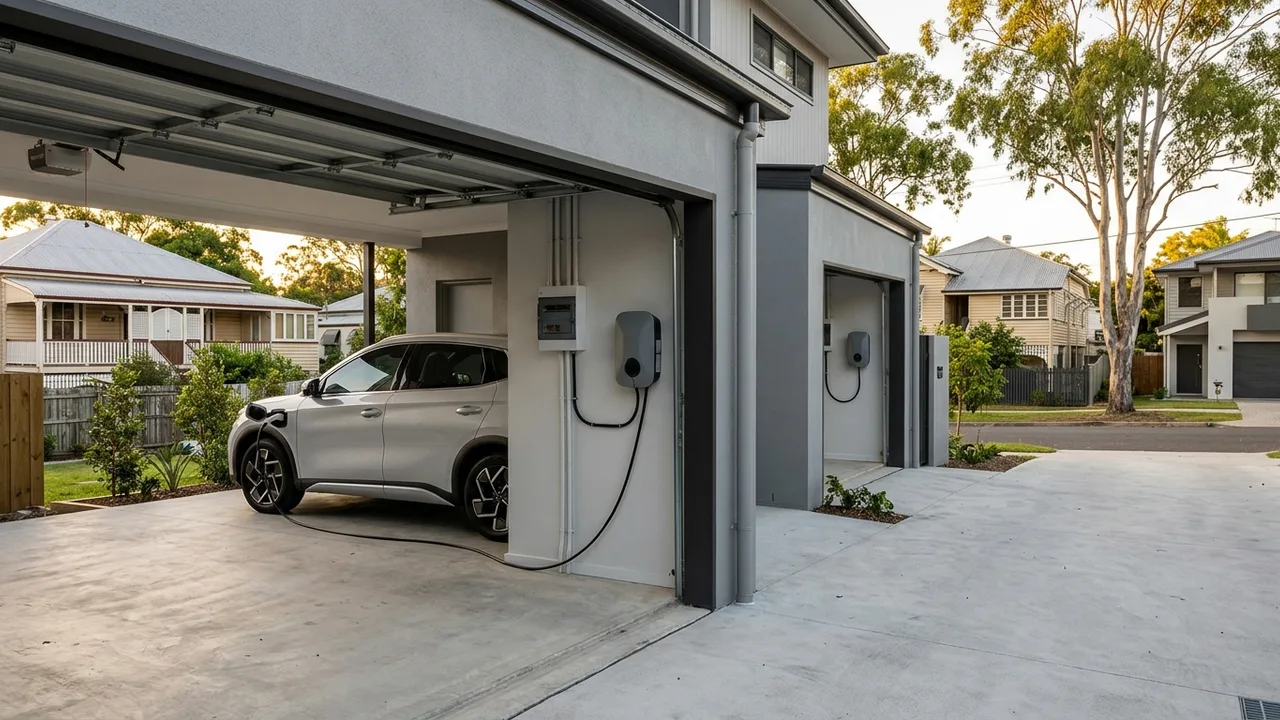
Three-phase power, if available on your street, allows chargers rated at 11 kilowatts or 22 kilowatts. Charge times drop significantly. If you ever run two EVs on one property, three-phase becomes far more practical.
Here is the trade-off: upgrading from single-phase to three-phase after a renovation is not a small job. It typically involves Energex, a new service connection, a switchboard upgrade and possibly internal rewiring. During a renovation, the same upgrade is much more manageable because the switchboard is already being touched and the internal cabling situation is easier to address.
If you are building a new home in Woolloongabba, East Brisbane or anywhere else we work, ask your electrician to confirm whether three-phase is available on your street and, if so, whether the cost difference to connect it now is worth it. Quite often, it is.
Solar Integration: Plan the Wiring Now, Even If Panels Come Later
A growing number of Brisbane homeowners want to charge their EV using surplus solar generation during the day rather than drawing grid power overnight. The logic is sound: if your system generates more than the house uses between 10 am and 3 pm, you can divert that surplus to the car instead of exporting it at a low feed-in tariff.
Setting this up properly requires specific wiring between your inverter, your smart charger and your switchboard. It also works best when those components can communicate electronically.
During a renovation, running the extra communication cable and positioning the charger in relation to the inverter is straightforward. Post-renovation, it is still possible but adds complexity. If you know solar is in the plan (even two or three years away), mention it to your electrician at the build stage and have them rough in the conduit path accordingly.
The Townhouse and Dual-Occupancy Situation
Renovations in the Inner West often involve dual-occupancy builds or townhouse conversions, which are common in suburbs like Dutton Park, Highgate Hill and West End. This adds a layer of consideration.
Each dwelling typically needs its own metered circuit for an EV charger, otherwise the billing gets complicated. If the development has shared parking, things get more complex again, and you may be entering strata or body corporate territory even for a small dual-occ. Getting the charger wiring designed before the walls close is especially important here, because correcting it later may require body corporate approvals and additional trenching.
We handle this kind of scenario regularly, and the honest answer is that early planning saves significant headaches and cost. A conversation with your electrician before the slab is poured is worth far more than one after handover.
What If You Have Already Renovated?
Plenty of homeowners reading this will have finished their renovation last year or five years ago. A retrofit is not a disaster. In many Brisbane homes with garages or covered carports, the cable path from the switchboard is manageable and the switchboard is already in reasonable shape.
The factors that make a retrofit harder and more expensive are:
- A long cable run (more than 20 to 30 metres, typically) from the switchboard to the parking area
- A substandard or outdated switchboard that needs replacement first
- Finished concrete or established landscaping between the switchboard and the car
- No room on the switchboard for a dedicated breaker
If your home does not have these problems, a retrofit job can be clean and cost-effective. We inspect the switchboard and cable path as part of quoting, so there are no surprises on the day.
A Closing Word on Timing
If you are mid-renovation or in the planning phase of a new build, adding EV charger provision to the scope is a straightforward decision. The incremental cost is low, the future benefit is real, and the work is far easier when walls and grounds are already open. Talk to your builder and make sure your electrician is across the spec before things close up.
If you have already renovated, the question is whether the conditions at your property make a retrofit practical. Many do. The best way to find out is a site visit and a straight conversation about what is involved.
We cover Coorparoo and the surrounding suburbs across Brisbane's Inner South and Inner West. If you want to understand what an EV charger circuit would actually involve at your specific property, whether that is a build in progress or a finished home, we are happy to come and have a look.
Quick answers