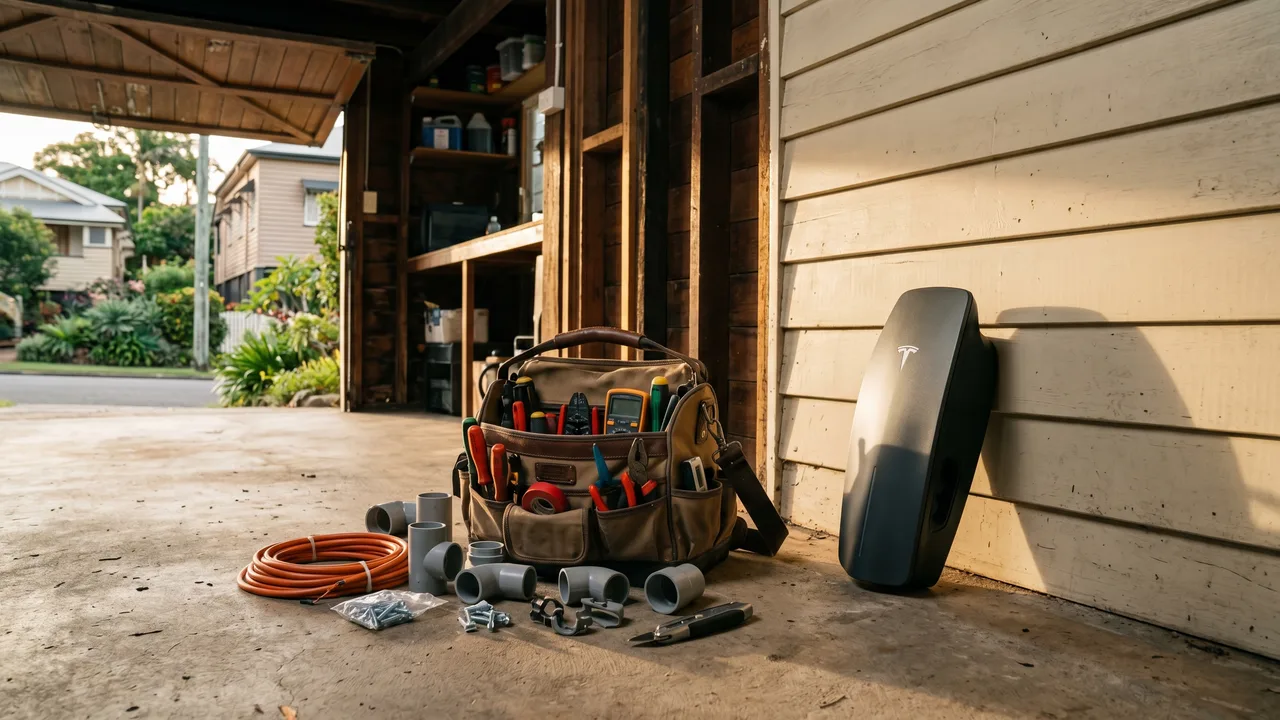
EV Charger Installation guide
What actually happens when an electrician installs an EV charger in Coorparoo?
What Actually Happens When an Electrician Installs an EV Charger in Coorparoo?
An electrician visits your home, assesses your switchboard, runs a dedicated circuit to your garage or carport, and mounts a wall-mounted charger. The whole job typically takes between two and five hours. That is the short version. Here is what actually happens, step by step, so you know what to expect before anyone arrives at your door.
The Site Assessment: Why It Matters More Than You Might Think
Before any cable gets pulled, the electrician walks your property. In Coorparoo and the surrounding Inner West suburbs, that walk-through can throw up a few surprises.
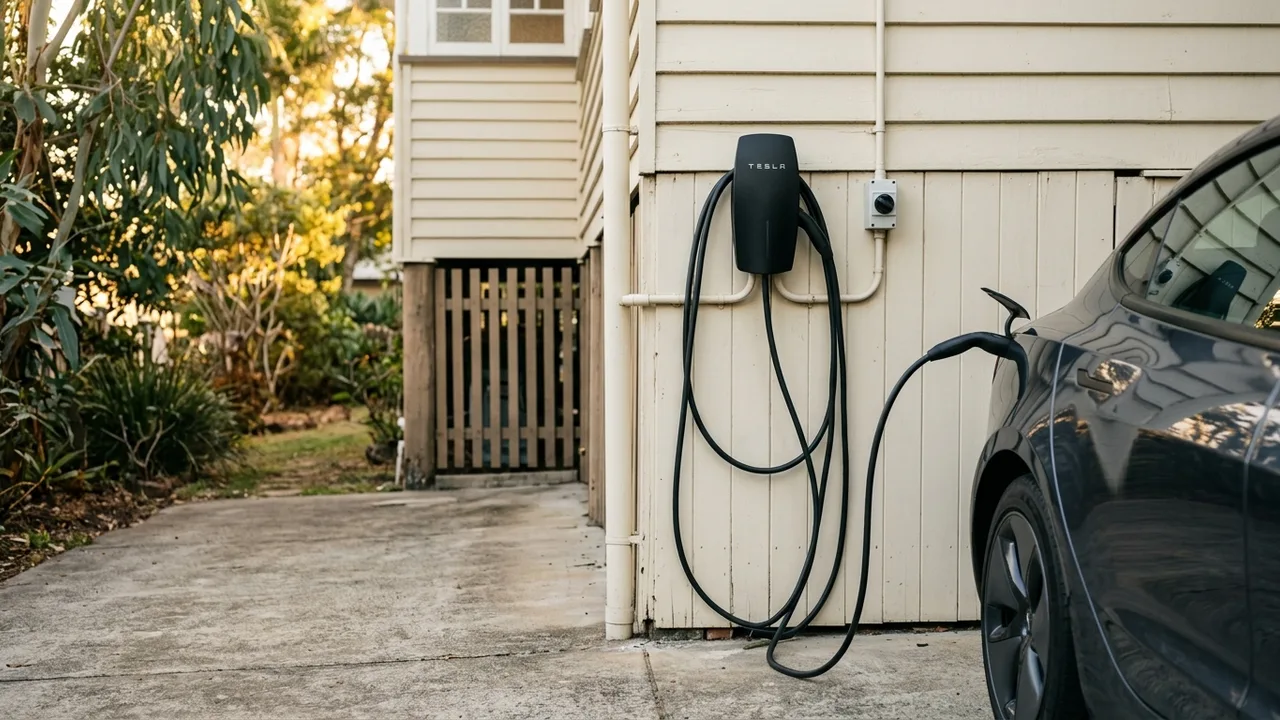
A lot of homes in this area are older Queenslanders or post-war brick-and-tile houses. Switchboards in these homes are sometimes still fitted with ceramic fuse carriers or older circuit breakers that were never designed to carry the sustained load of an EV charger. A 7.2 kW AC charger pulling 32 amps continuously for several hours is a very different demand on your wiring than a kettle or a clothes dryer.
The electrician checks a few things during this visit:
- Switchboard condition. Is it a modern consumer mains board with RCDs and circuit breakers, or is it something older that needs an upgrade before an EV circuit can be safely added?
- Available capacity. Does your main fuse (the one owned by Energex, not you) have enough headroom to support the additional load?
- Cable run distance. How far is the garage, carport, or driveway from the switchboard? In a typical Coorparoo post-war home, the switchboard is often inside the house on the back wall. A carport at the front or side might mean a 15-20 metre run, which affects cable sizing.
- Three-phase availability. Some streets in Coorparoo have three-phase power available at the kerb. If yours does, and you want faster charging, upgrading to three-phase is a real option worth discussing.
If anything flags as a problem, the electrician tells you before the job starts. A reputable installer does not just proceed anyway and sort it out later.
The Switchboard: The Most Common Complication
This is the part most people do not budget for, and it is worth understanding.
If your switchboard is due for replacement, the electrician will recommend a switchboard upgrade at the same time as the charger installation. Doing both jobs together saves a second call-out fee and means the new circuit is wired into a board that is compliant with current standards.
A switchboard upgrade in Coorparoo typically adds $800 to $1,500 to the job cost, depending on the size of the new board and how much of the existing wiring needs to be reconfigured. That is not a small number, but it is usually the right call. An undersized or ageing board is a genuine safety issue, and an EV charger drawing sustained current is exactly the kind of load that exposes a marginal board's weaknesses.
If your board is already modern and has a spare slot, you are in the more straightforward camp. The electrician simply installs a dedicated 32-amp circuit breaker and runs a new circuit.
Running the Cable: The Physical Work
Once the switchboard is sorted, the cable gets run. This is usually the most time-consuming part of the job.
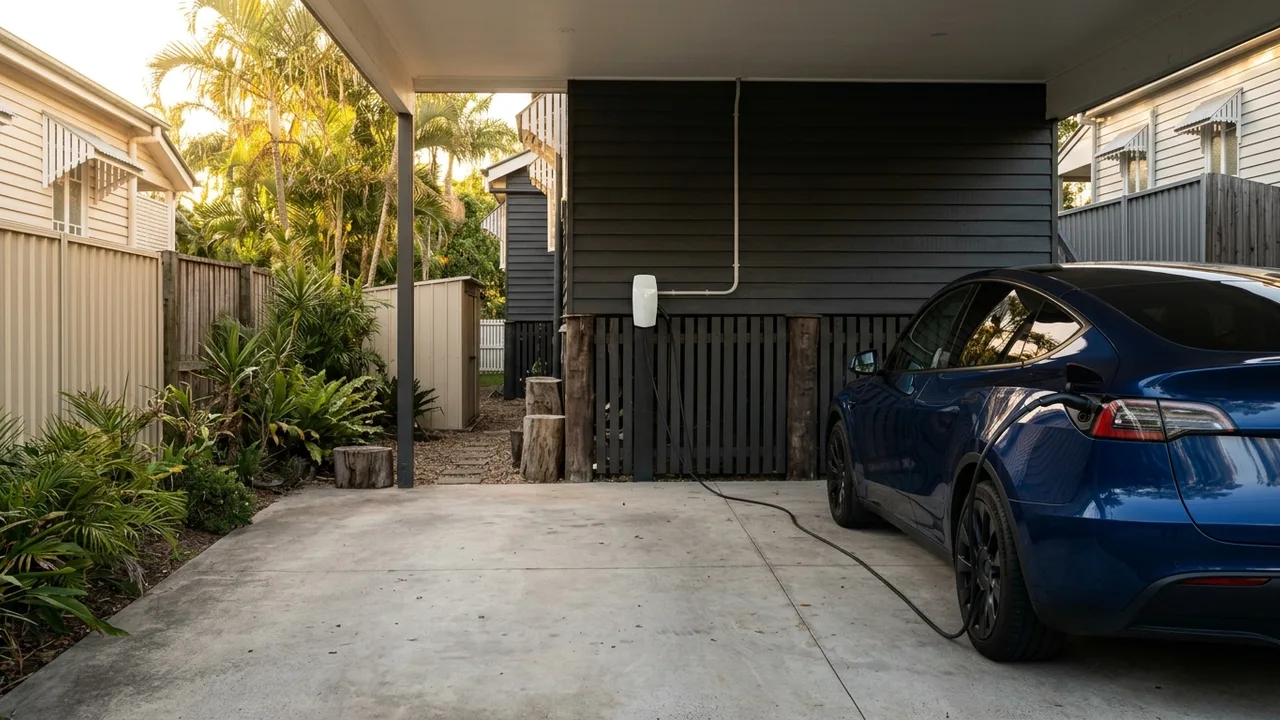
In a typical Coorparoo home, the cable runs from the switchboard, through the roof cavity or under the floor (depending on whether the house is on stumps or a slab), and out to the mounting point. A standard Queenslander on timber stumps makes under-floor runs quite accessible. A brick veneer on a concrete slab often means the cable goes through the roof cavity and down an external wall, which takes longer.
The electrician also needs to decide how to secure and protect the cable. Where the cable is exposed, conduit is used. Where it runs through building cavities, it is clipped or supported at regular intervals as required by AS/NZS 3000, the wiring standard that governs all Australian electrical work.
For outdoor or covered carport installations, the charger unit itself needs to be rated for the environment. Most quality wall-mounted chargers carry at least an IP54 rating for dust and splash resistance, which is adequate for a covered Brisbane carport. If your charger is going somewhere genuinely exposed to weather, discuss a higher-rated unit with your electrician.
The Charger Itself: Supply and Install
Most residential EV charger jobs in this area use a 7.2 kW single-phase charger, which will add roughly 40-50 km of range per hour of charging for most EVs. Overnight on a standard household single-phase supply, that is more than enough for typical daily driving in Brisbane.
If you have, or are planning, a solar system on your roof, it is worth mentioning this at the assessment. A solar-integrated setup allows the charger to draw from surplus solar generation during the day rather than from the grid. This is particularly relevant if you work from home or can charge during daylight hours. The wiring and configuration for solar integration is different from a standard install, and it is much easier to do correctly the first time than to retrofit later.
For residents who want maximum charging speed, a three-phase charger can deliver up to 22 kW. However, this requires three-phase power at your property. Not all Coorparoo streets have it available, and a three-phase upgrade via Energex involves a network application that adds time and cost to the project. Typically, the total cost for a three-phase upgrade plus charger installation runs from $3,000 to $4,500 or more, depending on your situation.
Compliance, Testing, and Paperwork
When the physical installation is complete, the electrician tests the circuit. This includes insulation resistance testing, polarity checks, and RCD trip-time testing. The charger is then commissioned and tested with the vehicle if one is available on site.
In Queensland, the electrician is required to issue a Certificate of Test for the electrical work. This document is important. If you ever sell your home, or if an insurance claim arises relating to the charging installation, this certificate is your evidence that the work was done properly by a licensed person. Keep it with your other property documents.
The work also needs to be notified to the Queensland electrical safety regulator. A licensed electrician handles this as part of the job. You do not lodge anything yourself.
If you bought a property and are not sure whether a previously installed charger was done to standard, we offer an EV charger inspection and compliance check. It covers the wiring, earthing, and AS/NZS 3000 compliance of the existing installation, and gives you a clear picture of whether the work is safe and certifiable.
What the Job Typically Costs, and What Drives the Price
For a straightforward single-phase charger installation in Coorparoo, with a modern switchboard already in place and a cable run of under 15 metres, expect to pay somewhere in the range of $1,800 to $2,500 all up, including the charger unit.
Prices go up when:
- The switchboard needs upgrading
- The cable run is long or difficult to access
- Three-phase power is involved
- Trenching is required for an underground cable run to a detached garage
- The property is a strata or apartment (which involves additional approvals)
Prices are fairly consistent across the Inner West suburbs we cover, including West End, Woolloongabba, Annerley, Greenslopes, Camp Hill, and Tarragindi. The main variable is the property itself, not the postcode.
A Straightforward Recommendation
If you are buying an EV or have already bought one and are relying on a 10-amp extension lead to charge overnight, organise a proper installation sooner rather than later. The extension lead workaround is slow, and long-term use of a domestic power point for EV charging is not what those circuits are designed for.
Get the site assessment done first. It costs nothing and tells you exactly what your specific property needs. From there, you can make a clear decision about whether to go single-phase, plan for three-phase, or incorporate solar. A good installer will give you honest options, not push you toward the most expensive one.
If you are in Coorparoo or any of the surrounding suburbs and want a quote based on your actual switchboard and cable run, give us a call. We will come and look before we price anything.
Quick answers